Crafting Livelihoods,
Weaving Hope
A social enterprise from the Nilgiri Hills, turning needlework and traditional craft into dignity, income and independence for women.
What guides every stitch
A transformative force for women
To become a transformative force for women's empowerment, fostering material, intellectual and emotional growth by leveraging three decades of experience in uplifting women.
Sustainable livelihoods, real autonomy
To co-create sustainable livelihood opportunities and economic autonomy for women from challenging economic and social backgrounds through skill development, professional management and market integration.
Threads that Bind
From a one-woman quilting table to a platform that connects hundreds of women with the market, told in six chapters.
Training women since 1992
Since 1992, Sheela Powell, founder of Shalom, has been engaged in vocational capacity-building, training women in handicrafts including knitting, tailoring and advanced needlework.
Her work ran under prominent State Government initiatives: the Training of Rural Youth for Self-Employment (TRYSEM) and the Development of Women and Children in Rural Areas (DWACRA). During the 1990s she was also an active member of the district governing body of the District Rural Development Agency (DRDA).

A one-woman operation that grew
Shalom began as a one-woman operation producing exquisite quilts, cushions and other household furnishings to supplement her own family's income. As demand grew, women were trained in tailoring to help with production.
Most women who approached Shalom wanted to supplement family income while running a household. Many had married before completing the higher education that might have led to a well-paid job, and had no training in skills such as tailoring.
- ✓Training first, then employmentShalom taught basic tailoring before employing the women.
- ✓A new circle of friendsA life-changing opportunity, beyond the extra income.
- ✓Collateral for creditShalom's collateral let women borrow from banks for family emergencies.

A stall of our own
Shalom's quilts and furnishings found a niche among people looking for alternatives to mass-produced items, and the team began taking part in small fairs and exhibitions in and around Ootacamund.
In 2005, Shalom registered as a self-help group under a government programme. This gave it a small stall in the government marketing premises built in Ootacamund for women-headed self-help groups, used as both workshop and showroom.
By then Shalom had built direct links to textile manufacturers in Karur, about 200 kilometres away, and had access to bank credit.


Meeting the tribal artisans
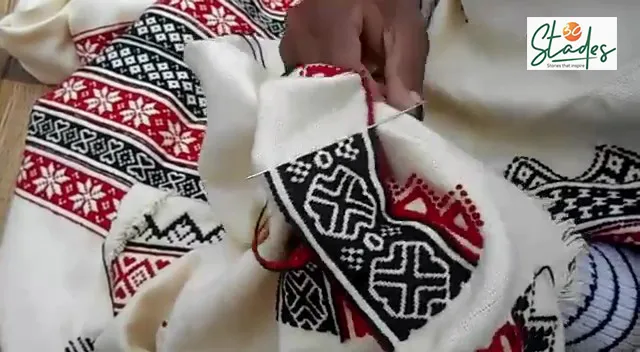
In that same marketplace, Shalom met tribal artisans who ran exclusive stalls for their embroidery, mostly traditional shawls. Sales were slow, even at the height of tourist season.
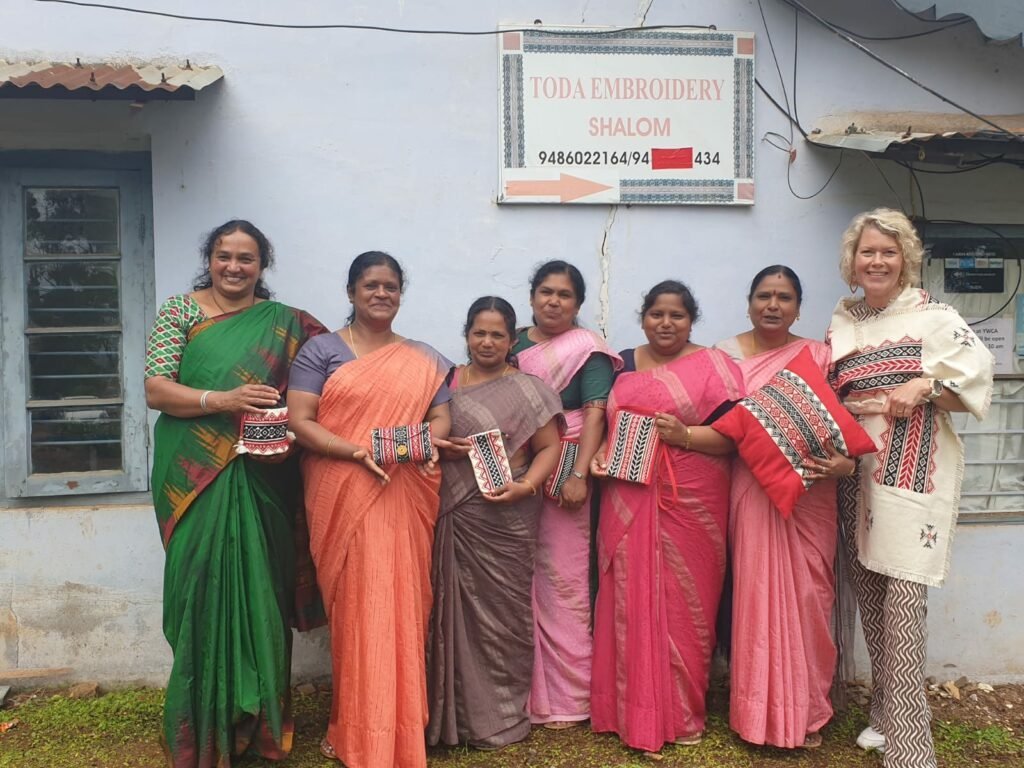
Out of comradeship, Shalom began tailoring their embroidered fabric into purses and cushion covers. As the bond grew, Shalom connected the artisans with its sources of credit and fabric suppliers, and personally helped some of the women financially and in finding appropriate medical care.
Shalom inadvertently became the artisans' primary channel for speaking with customers and government officials.
Going to town to "get fabric" from Shalom became a weekly ritual for many women artisans.

Growing together
Dividing the work of embroidering, stitching and marketing among groups of women proved so successful that Shalom drew support from government and non-governmental organisations, notably the All-India Artisans and Craft-workers Welfare Association (AIACA) and the CSR programme of the Royal Bank of Scotland, which lasted about four years.
With their technical and administrative help, Shalom recruited regular staff and put professional management and marketing in place. Its success in bringing women from diverse marginal communities together caught the attention of the Tribal Cooperative Marketing Development Federation of India (TRIFED), which offered skill development training for women associated with Shalom and eventually became a major purchaser.
As visibility grew, Women on Wings (WOW), an international organisation that co-creates jobs leading to economic autonomy for women in India, supported Shalom in widening its platform beyond embroidery and tailoring, offering hundreds of women with little or no education the chance to earn stable incomes together.


Recognition for Toda embroidery
Shalom's distinguished reputation in traditional crafts allowed it to play a pivotal role in the release of a commemorative postage stamp celebrating Toda embroidery.
In further recognition of its commitment to authenticity and quality, Shalom also secured the prestigious Craftmark certification, an official seal of genuineness for Toda embroidery.

"By choosing to support and promote the products of Shalom, you contribute directly to the empowerment of women navigating complex social and economic challenges. Each purchase becomes more than a transaction: it is an investment in dignity, resilience and the creation of sustainable livelihoods."
A model built around women's lives
Embroidery, stitching and marketing are divided among groups of women, so each does what she does best. Shalom's key competence is accommodating the demanding schedules of women who run large households, and the ad-hoc schedules of tribal artisans, while still meeting the demands of a challenging commercial market.
Fabric, ready to work
Artisans collect specially sourced fabric, cut by Shalom staff for purses, cushion covers and bed spreads. No fabric purchase needed.
Craft at your own pace
They embroider at home, on their own schedule, and return the finished cloth to Shalom.
Instant wages
Pay is given immediately, based on the intricacy and scale of the embroidery, making the weekly trip to Ootacamund town worthwhile.
To market, nationwide
Products reach exclusive handicraft exhibitions and showrooms across India, and are sold online and shipped within and outside the country.
Risk carried by Shalom
Artisans bear no sale risk on their embroidery. Shalom holds the inventory to meet clients' unexpected needs and shoulders market risk, balancing showroom sales with exhibitions and regular clients such as handicraft showrooms in big cities.
Value returned to the artisan
Most of the increase in sale value is returned to artisans as higher wages. This attracted more women artisans who prefer Shalom as their buyer, and "getting fabric" from Shalom became a weekly ritual for many.
A journey, year by year
From a marketplace stall to national platforms, with the support of partners who believed in the women of Shalom.
Foundation
A humble beginning in an Ootacamund marketplace stall culminated in the formal registration of Shalom as a self-help society in 2005.
Professional Scaling
Collaborations with the All-India Artisans and Craft-workers Welfare Association (AIACA) and the Royal Bank of Scotland (RBS) CSR programme introduced professional management practices, increasing the number of women artisans and their compensation.
Strategic Government Partnerships
Recognition by the Tribal Cooperative Marketing Development Federation of India (TRIFED) led to vital skill development training programmes and major procurement contracts. Higher sales meant higher compensation for hundreds of artisans.
Financial Resilience & National Presence
Shalom showed strong resilience against macro-economic shifts such as demonetisation and the introduction of GST, and was selected by the Federal Government to exhibit in metropolitan hubs across India.
Partnership with Women on Wings (WOW)
Engagement with WOW marked a strategic step to widen the platform's scope, aiming to economically empower hundreds of women with limited formal education and livelihood options.
Resilience through COVID-19
Despite significant disruption to cash flow and market demand, Shalom sustained artisan livelihoods and maintained operational continuity throughout the crisis.
Recovery, Growth & Expansion
The award recognised the organisation's remarkable post-pandemic recovery and growth. Building on its needlework foundation, Shalom broadened its range with craft products sourced from tribal and non-tribal artisans.
Honoured for authenticity and impact

Commemorative Postage Stamp
A stamp celebrating Toda embroidery, released through a Shalom initiative (2016).
Craftmark Certification
An official seal of genuineness for Toda embroidery, a Shalom initiative (2017).
Entrepreneur of the Year
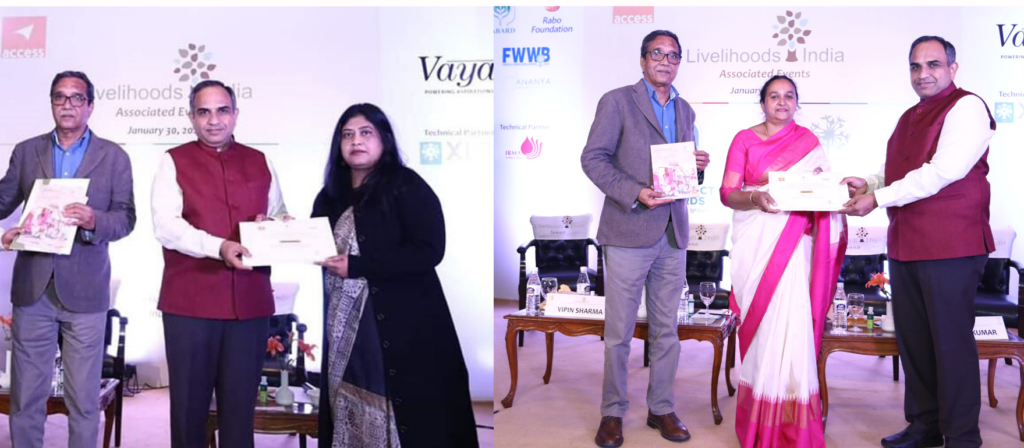
Awarded to our founder by the Craft Society of Telangana for post-pandemic recovery and growth.
Knots in the Thread
Shalom's role as an intermediary between traditional artisans and the market has created enormous value for women from many communities. The women now working as full-time tailors have moved up in the family hierarchy as breadwinners. But the path is not always smooth.
The challenge
Toda artisans are very protective of their craft and reluctant to pass the skill on to others. This is the single biggest factor threatening the survival of the needlework tradition, as it limits scalability and the ability to respond to market demand.
The number of artisans with needlework skills is also shrinking as younger members move to modern lifestyles, using affirmative action policies that open up education and employment for marginalised communities. A sense of superior origin and culture among some artisans also makes a healthy trading relationship harder to build.
The way forward
For Shalom, traditional needle and craft work are a means to generate livelihoods for women, not an end in themselves. Shalom has expanded into alternative crafts, training hundreds of women in standard embroidery and tailoring so they can supplement income for hundreds of families.
Shalom now markets bamboo and palm leaf products made by the Kota, Kurumba and Irula tribes of the Nilgiri Hills, and products of the Paniya tribe from the Malabar plains. Cross-stitch and crochet by women from economically and socially challenged backgrounds also form a large part of the range.
Moments from our journey
Nearly three decades of training, gatherings, exhibitions and milestones.


Every purchase is an investment in dignity
By choosing to support and promote Shalom's products, you contribute directly to the empowerment of women navigating complex social and economic challenges, and to sustainable livelihoods.
Explore Our Crafts